chapter-four/0100~0199/0173.Binary-Search-Tree-Iterator
173. Binary Search Tree Iterator
题目
Implement an iterator over a binary search tree (BST). Your iterator will be initialized with the root node of a BST.
Calling next() will return the next smallest number in the BST.
Example:
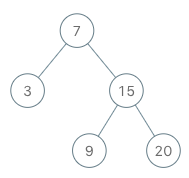
BSTIterator iterator = new BSTIterator(root);
iterator.next();    // return 3
iterator.next();    // return 7
iterator.hasNext(); // return true
iterator.next();    // return 9
iterator.hasNext(); // return true
iterator.next();    // return 15
iterator.hasNext(); // return true
iterator.next();    // return 20
iterator.hasNext(); // return false
Note:
next()andhasNext()should run in average O(1) time and uses O(h) memory, where h is the height of the tree.- You may assume that
next()call will always be valid, that is, there will be at least a next smallest number in the BST whennext()is called.
题目大意
实现一个二叉搜索树迭代器。你将使用二叉搜索树的根节点初始化迭代器。调用 next() 将返回二叉搜索树中的下一个最小的数。
解题思路
- 用优先队列解决即可
代码
package leetcode

import (
	"container/heap"

	"github.com/halfrost/leetcode-go/structures"
)

// TreeNode define
type TreeNode = structures.TreeNode

/**
 * Definition for a binary tree node.
 * type TreeNode struct {
 *     Val int
 *     Left *TreeNode
 *     Right *TreeNode
 * }
 */

// BSTIterator define
type BSTIterator struct {
	pq    PriorityQueueOfInt
	count int
}

// Constructor173 define
func Constructor173(root *TreeNode) BSTIterator {
	result, pq := []int{}, PriorityQueueOfInt{}
	postorder(root, &result)
	for _, v := range result {
		heap.Push(&pq, v)
	}
	bs := BSTIterator{pq: pq, count: len(result)}
	return bs
}

func postorder(root *TreeNode, output *[]int) {
	if root != nil {
		postorder(root.Left, output)
		postorder(root.Right, output)
		*output = append(*output, root.Val)
	}
}

/** @return the next smallest number */
func (this *BSTIterator) Next() int {
	this.count--
	return heap.Pop(&this.pq).(int)
}

/** @return whether we have a next smallest number */
func (this *BSTIterator) HasNext() bool {
	return this.count != 0
}

/**
 * Your BSTIterator object will be instantiated and called as such:
 * obj := Constructor(root);
 * param_1 := obj.Next();
 * param_2 := obj.HasNext();
 */
type PriorityQueueOfInt []int

func (pq PriorityQueueOfInt) Len() int {
	return len(pq)
}

func (pq PriorityQueueOfInt) Less(i, j int) bool {
	return pq[i] < pq[j]
}

func (pq PriorityQueueOfInt) Swap(i, j int) {
	pq[i], pq[j] = pq[j], pq[i]
}

func (pq *PriorityQueueOfInt) Push(x interface{}) {
	item := x.(int)
	*pq = append(*pq, item)
}

func (pq *PriorityQueueOfInt) Pop() interface{} {
	n := len(*pq)
	item := (*pq)[n-1]
	*pq = (*pq)[:n-1]
	return item
}