chapter-four/0300~0399/0382.Linked-List-Random-Node
382. Linked List Random Node
题目
Given a singly linked list, return a random node's value from the linked list. Each node must have the same probability of being chosen.
Implement the Solution class:
Solution(ListNode head)Initializes the object with the integer array nums.int getRandom()Chooses a node randomly from the list and returns its value. All the nodes of the list should be equally likely to be choosen.
Example 1:
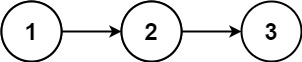
Input
["Solution", "getRandom", "getRandom", "getRandom", "getRandom", "getRandom"]
[[[1, 2, 3]], [], [], [], [], []]
Output
[null, 1, 3, 2, 2, 3]

Explanation
Solution solution = new Solution([1, 2, 3]);
solution.getRandom(); // return 1
solution.getRandom(); // return 3
solution.getRandom(); // return 2
solution.getRandom(); // return 2
solution.getRandom(); // return 3
// getRandom() should return either 1, 2, or 3 randomly. Each element should have equal probability of returning.
Constraints:
- The number of nodes in the linked list will be in the range
[1, 104]. -10^4 <= Node.val <= 10^4- At most
10^4calls will be made togetRandom.
Follow up:
- What if the linked list is extremely large and its length is unknown to you?
- Could you solve this efficiently without using extra space?
题目大意
给定一个单链表,随机选择链表的一个节点,并返回相应的节点值。保证每个节点被选的概率一样。
进阶: 如果链表十分大且长度未知,如何解决这个问题?你能否使用常数级空间复杂度实现?
解题思路
- rand.Float64() 可以返回 [0.0,1.0) 之间的随机数。利用这个函数完成我们的随机化取节点的过程。
代码
package leetcode

import (
	"math/rand"

	"github.com/halfrost/leetcode-go/structures"
)

// ListNode define
type ListNode = structures.ListNode

/**
 * Definition for singly-linked list.
 * type ListNode struct {
 *     Val int
 *     Next *ListNode
 * }
 */
type Solution struct {
	head *ListNode
}

/** @param head The linked list's head.
  Note that the head is guaranteed to be not null, so it contains at least one node. */
func Constructor(head *ListNode) Solution {
	return Solution{head: head}
}

/** Returns a random node's value. */
func (this *Solution) GetRandom() int {
	scope, selectPoint, curr := 1, 0, this.head
	for curr != nil {
		if rand.Float64() < 1.0/float64(scope) {
			selectPoint = curr.Val
		}
		scope += 1
		curr = curr.Next
	}
	return selectPoint
}

/**
 * Your Solution object will be instantiated and called as such:
 * obj := Constructor(head);
 * param_1 := obj.GetRandom();
 */